








Open source. Built together.

AgentForge

Reliable, frontier, responsible AI for science

An open community of scientists who build AI agents for research, test them, and judge when to trust them. It began with a workshop at NTU Singapore in November 2026, supported by Schmidt Sciences.

AgentForge 2026 · NTU Singapore · 15–19 November 2026

4days of building
3keynote talks
5open tutorials
5hackathon teams

What we stand for

Agents scientists can check, use and own

An AI agent is more than a chatbot: it pursues a goal by planning steps and calling tools and data sources, with varying degrees of human oversight. We do not aim to turn scientists into AI developers. We build agents so that researchers understand the tools they use.

  • A confident answer is not a resultAgents can be fluent and wrong, and they act on what they produce.
  • The tools change every monthModels, MCP servers and agent frameworks move faster than any course.
  • Who sets the standard?Scientists know the questions, the methods and what counts as evidence.
Illustration: three stacked plates, with circuits at the bottom, a crystal and a molecule in the middle, and a magnifying glass over a chart on top
  • Reliable

    Check before you trust

    A confident answer is not a scientific result. We test agents the way we test methods: how was the output produced, is the process valid, and can it be reproduced?

  • Frontier

    Work with today's tools

    Memory, tool use through MCP, Agent Skills, multi-agent systems: we build with current agent technology, adapt it to real research questions, and share what works and what does not.

  • Responsible

    Judgment stays with scientists

    Scientists know the questions, the methods and the standards of evidence. They should help decide how AI is designed, evaluated and brought into research, and stay responsible for the results.

Oxford, September 2025

One Schmidt community
inspires the next

AgentForge was inspired by a Schmidt Sciences community event: the Schmidt Research Software Engineering Training Programme in Oxford (11–20 September 2025). For ten days, fellows from very different fields worked in small teams and built research software together. Some of us met there.

That experience of learning by building, side by side, is what we wanted to pass on. It shaped how we designed AgentForge: tutorials with code that runs, followed by a hackathon in which teams build and evaluate their own research agents. We want to carry that spirit forward, from one Schmidt Sciences community to the next and beyond.
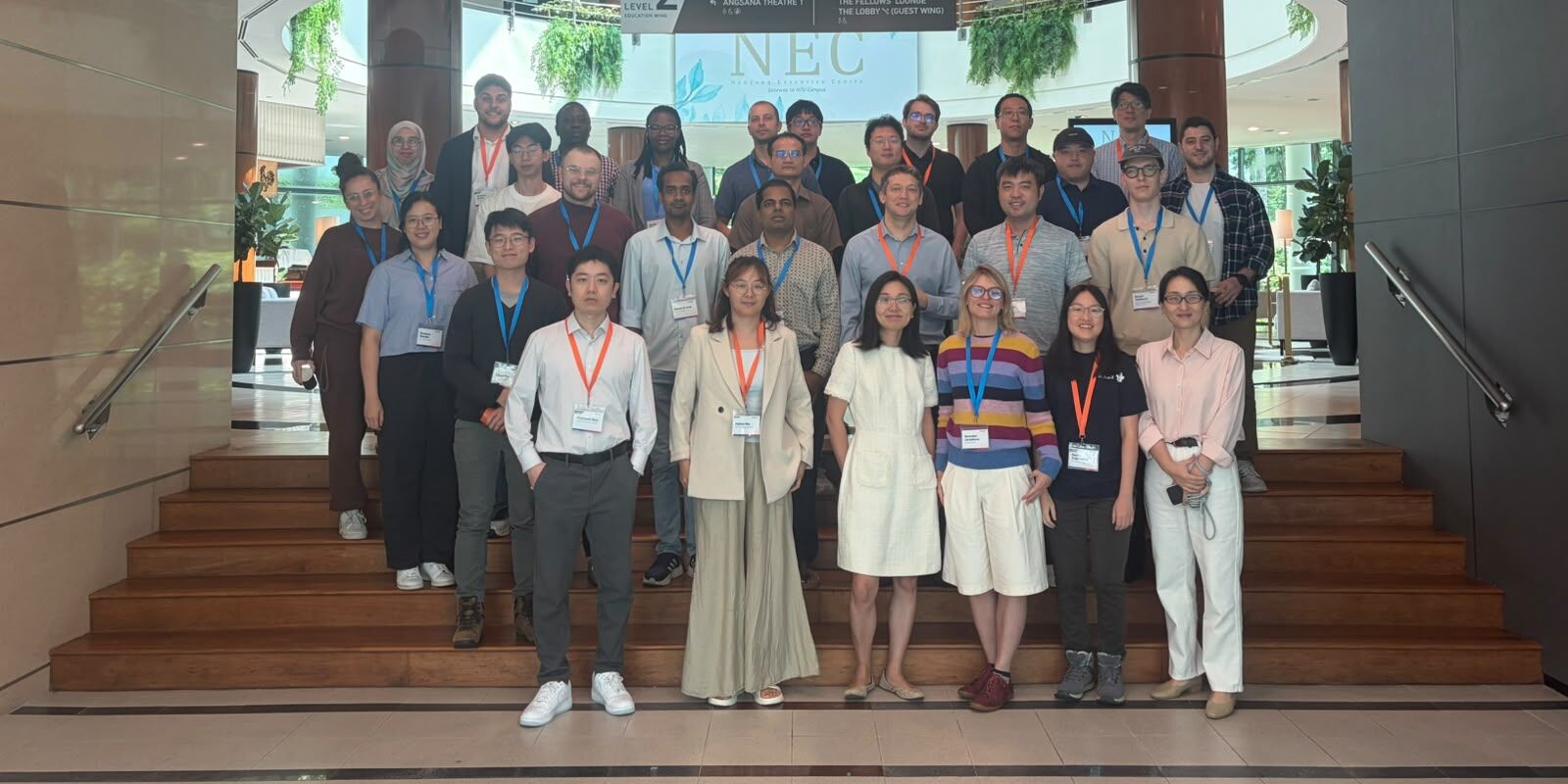
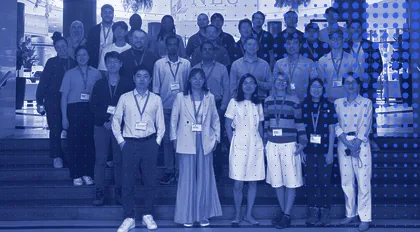
AgentForge 2026 participants and organisers on the stairs of the Nanyang Executive Centre
AgentForge 2026 · Nanyang Executive Centre, NTU Singapore

Open materials

What we built

All materials from AgentForge 2026 are public. Use them in your own teaching and research.

Five open tutorials

Slides and Colab notebooks that run without any local installation.

  1. From chatbot to agent
  2. Agentic memory
  3. Agents on platforms: MCP and Agent Skills
  4. Multi-agent systems
  5. Evaluating agents
github.com/AgentForgeWorkshop/Tutorials

Hackathon projects

Teams built research agents during the week, from a checker that finds mathematical errors in papers to an agent that judges how novel a research idea is. Their code is public.

See the showcase

mini_agent 2.0.0MIT licence

The teaching agent from Tutorial 1: a small, complete AI agent for the terminal and for Python, with the agent loop in plain sight. It installs with one command on macOS, Linux and Windows.

mini_agent 2.0.0 · offline demo
$ mini_agent --backend offline "Compute 3**7."
Query: Compute 3**7.
----------------------------------------

[agent Step 1]
  Tokens: 347 in + 93 out = 440 total
  Think: The task is a single arithmetic computation, so I will use the calc tool directly.
  Action: calc({'expr': '3**7'})
  Result: 2187

[agent Step 2]
  Tokens: 708 in + 157 out = 865 total
  Think: The calc tool already evaluated 3**7 and returned 2187, so the goal is complete.
  Action: done({'answer': '2187'})
  -> done
----------------------------------------
Answer: 2187
curl -LsSf https://raw.githubusercontent.com/Superionichuan/mini_agent/main/install.sh | sh github.com/Superionichuan/mini_agent

From the hackathon

Built in a week

Working interfaces, built and evaluated by participants during the workshop.

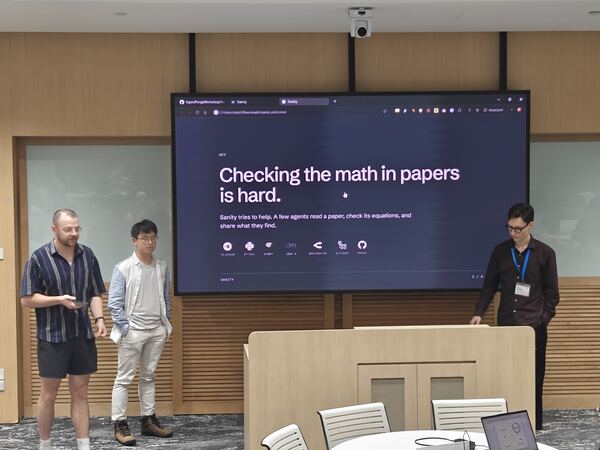
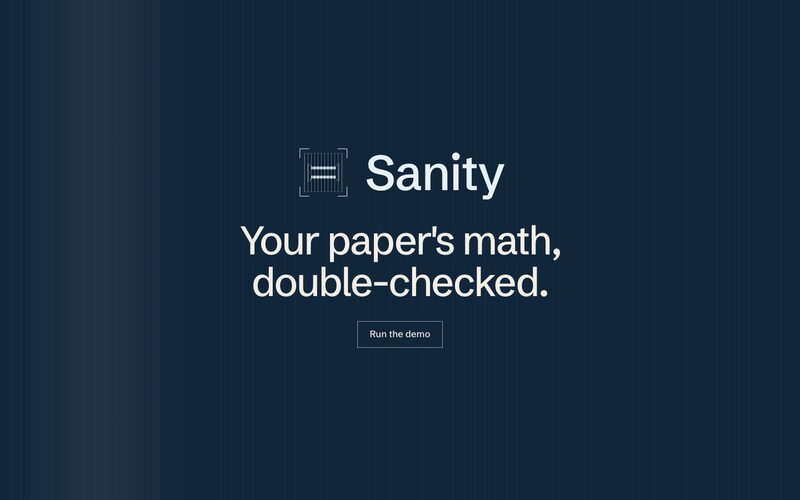
Sanity website: Your paper's math, double-checked

Sanity

Finds mathematical errors in papers: the language model proposes, a computer algebra system and Lean decide.

Try the live site
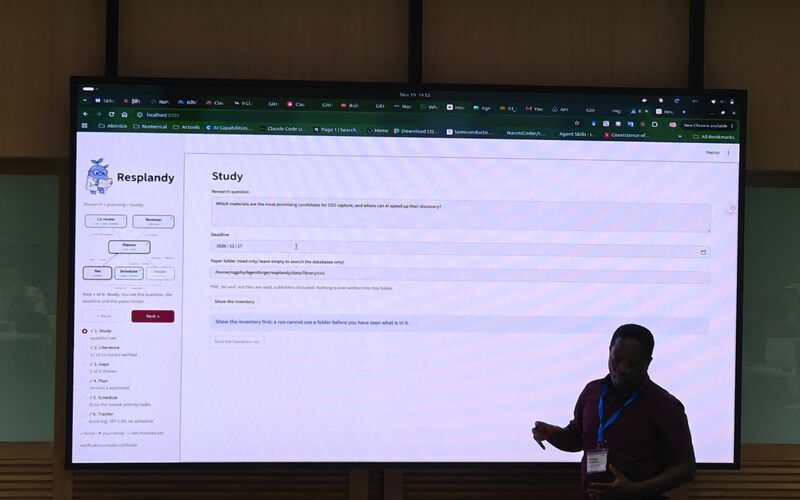
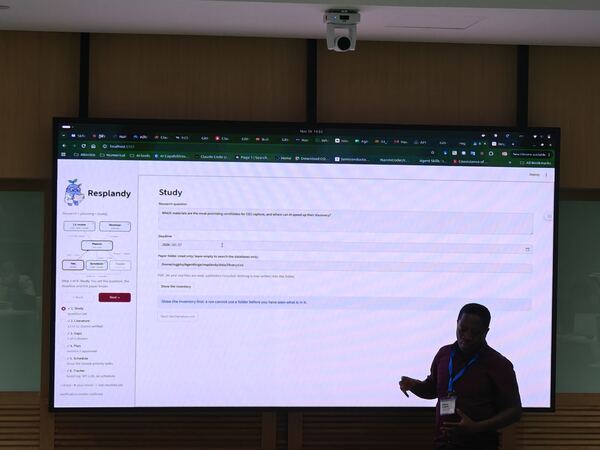
The Resplandy research-planning app shown on the screen during the final presentations

Resplandy

A research-planning assistant: agents propose, code checks, you decide.

See the code
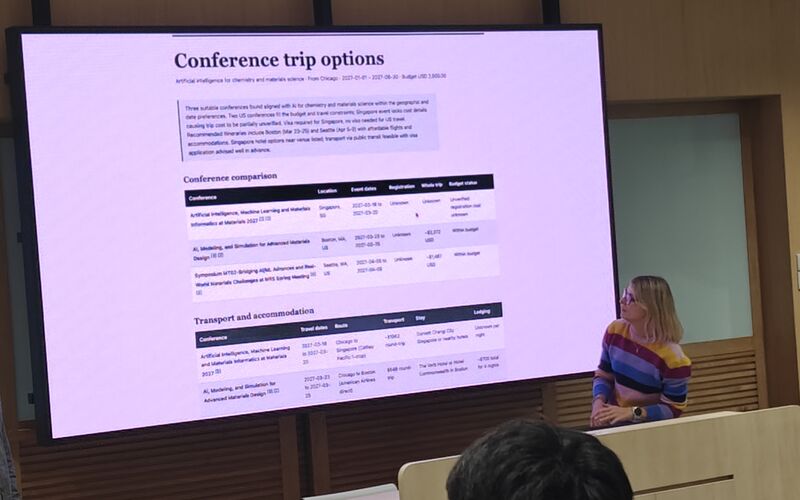
A TripPlanner report comparing conference trip options, shown during the final presentations

TripPlanner

Plans trips to academic conferences and writes a report that compares the options.

See the code

The week in pictures

Five days in Singapore

Hover over a photo to see it in colour. Every photo is on the photos page in full size, to download and share.

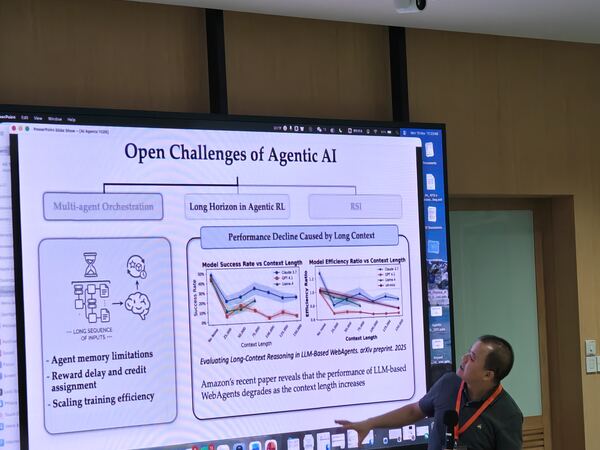
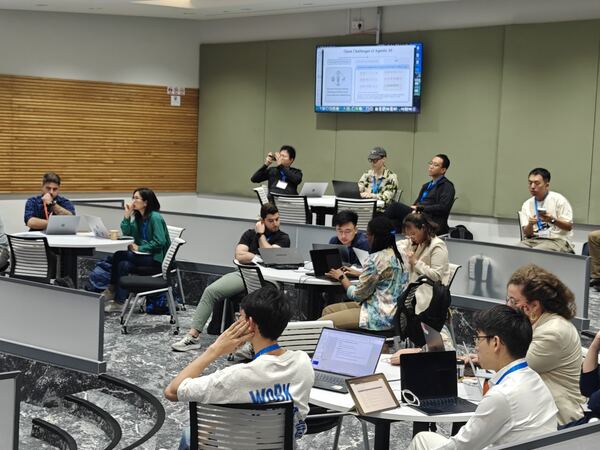
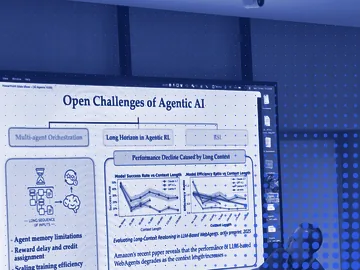
Keynote: open challenges of agentic AI
Keynote
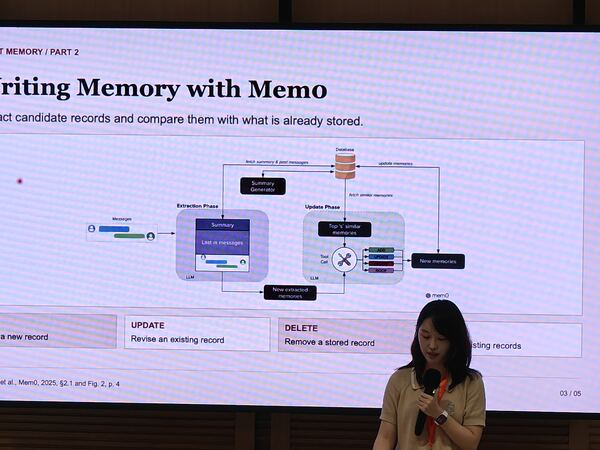
Tutorial: agentic memory
Building agents together
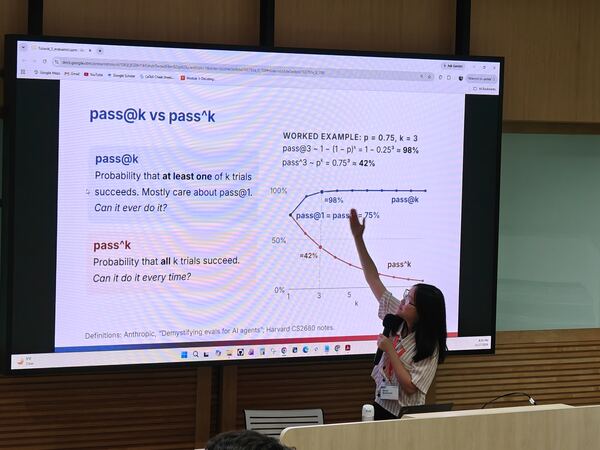
Tutorial: evaluating agents
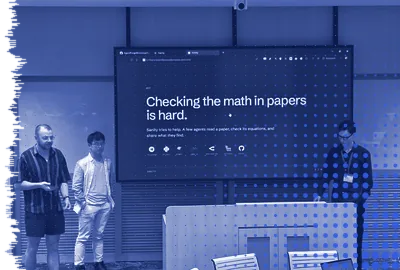
Hackathon: Sanity
Hackathon: Sanity
Hackathon: Resplandy
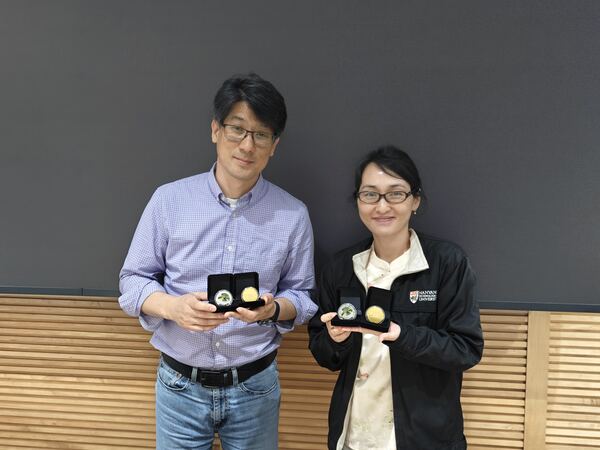
Excellent Researcher Awards
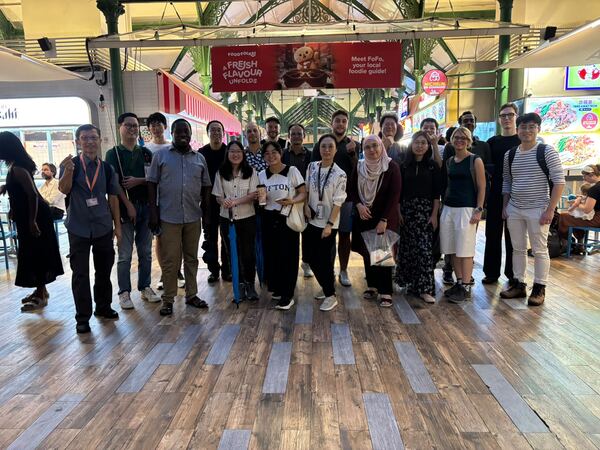
Dinner at Lau Pa Sat
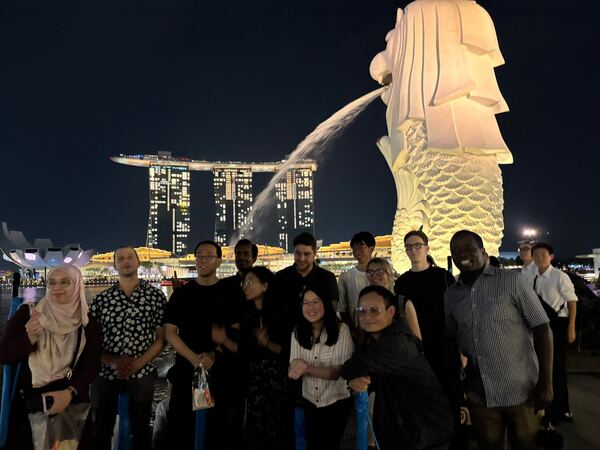
By the Merlion at night
Built together
Built together

Coming next

The AgentForge Playbook

An open guide to running an AI-agent workshop for scientists, drawn from what worked, and what did not, at AgentForge 2026.

In preparation

Learn it

How we designed the programme: tutorials, hackathon, evaluation, timeline and budget.

Next

Follow it

Templates and checklists that other organisers can reuse for their own workshops.

Later

Write it together

We will open the playbook to contributions, so that every workshop that uses it can make it better.

People

Made by everyone who built something

AgentForge 2026 was made by its organisers, speakers, tutorial leads and every participant who built something during the week.

Keynote speakers

  • Prof. Bo AnPresident's Chair Professor and Head of the Division of Artificial Intelligence, College of Computing and Data Science, NTUAI Agents: From Scaffolding to Self-Improvement
  • Dr. Zekun RenProject Leader at BEARS and Co-founder of PUDAApplication of Agentic AI in materials science
  • Mr. Volodymyr IermolaievCo-founder and CEO of Ajentik AI, SingaporeApplied Agentic AI: From Concepts to Real-World Applications

Organising team

  • Dmytro KosiachevskyiSchmidt AI in Science Postdoctoral Fellow, National University of Singapore
  • Hailan MaSchmidt AI in Science Postdoctoral Fellow, Nanyang Technological University
  • Nanta SophonratSchmidt AI in Science Postdoctoral Fellow (Alum), University of Michigan
  • Shichuan SunSchmidt AI in Science Postdoctoral Fellow, Nanyang Technological University
  • Yukun XueMaster's candidate, Xidian University; Tsinghua University; ByteDance Seed
  • Chengran YangSchmidt AI in Science Postdoctoral Fellow, Nanyang Technological University

Tutorial leads

  • Martin Hoffmann PetersenNTU AI4X Postdoctoral Fellow, Nanyang Technological University
  • Dmytro KosiachevskyiNational University of Singapore
  • Emha Bayu MiftahullatifPhD student, Materials Science and Engineering, NTU
  • Shreyas Pethe DineshPhD student, Materials Science and Engineering, NTU
  • Nanta SophonratUniversity of Michigan
  • Shichuan SunNanyang Technological University
  • Yukun XueXidian University
  • Chengran YangNanyang Technological University

Names are listed alphabetically by family name.

Get involved

Open source, built together

We want AgentForge to grow as an open community in which scientists from every field build, test and share AI agents for research, and learn from each other's mistakes as much as from their successes.

Teach with it

Run the tutorials in your own course or group meeting. The notebooks open in Colab, and the slides are in the repository.

Get the tutorials

Build on it

Extend mini_agent or a hackathon project for your own research, and send improvements back as a pull request.

Browse the code

Tell us what you need

Found a bug, or want a tutorial on a topic we have not covered? Open an issue. New activities will be announced on this page.

Open an issue

Supported by

Schmidt Sciences Nanyang Technological University